

Who Decided Outdoor Clothing Should Be Made of Plastic?
When I started my company, Ocean SF, it was because there were no natural fabrics in modern athletic wear. If you went hiking, you had to wear polyester. If you went skiing, you wore all polyester from the lightweight wicking underlayer on. If you went sailing on San Francisco Bay, they told you to layer and wear polyester fleece under your storm jacket, which was fine until you got wet, and unlike other sports, you never know in sailing when you will get wet, and you can’t go home and change.
I also remember watching hundreds of cyclist ride by me, breathing petroleum into their pores on a hot summer day. I couldn’t help but think there was something wrong with that. When my kids were little, I had to buy them pajamas from France because the U.S. only sold polyester options. On a trip home to Oregon one summer, I went to the Columbia store in downtown Portland and couldn’t find anything to buy except that wasn’t polyester, and this was in 2014, twelve years ago.
Today, the modern outdoor and athletic apparel industry is not an extension of nature. It is an extension of the petroleum industry.
Polyester clothing also impacts your endocrine system, which uses tiny chemical signals to regulate everything from menstrual cycles and thyroid function to fertility, metabolism, stress, blood sugar, and sleep. Endocrine-disrupting chemicals (EDCs) can mimic, block, or interfere with these signals.
We usually think of EDC exposure through food packaging, cosmetics, and household products. But our skin is also an exposure route, and chemicals used in textiles can migrate from fabric through sweat and skin contact. Consider the impact of synthetic athletic clothing pressed against warm, damp skin for hours at a time.
For decades, massive corporate networks have maintained a silent consensus, flooding the market with cheap, oil-based synthetics, polyester, nylon, and fleece, while quietly burying the reality that millions of microplastics are shed into the very waters we drink, swim, and navigate. They have conditioned the world to accept synthetic compromise as the standard for high-performance.
Ocean SF, my sailing apparel brand, rejects the permission of a compromised market.
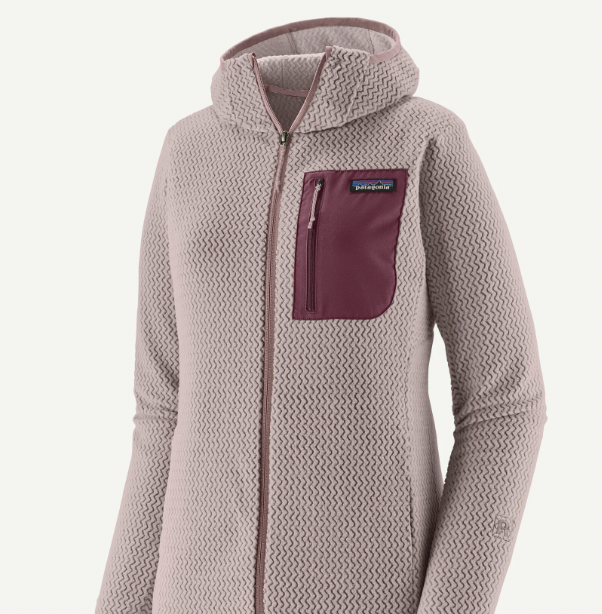
Patagonia is greenwashing at its finest. They say they care, but do they really? They are still selling 100% polyester garments. Like this beauty:
Recycled Plastic Is Still Plastic
A plastic bottle may have been recycled into a fiber instead of going straight into the waste stream, but that fiber is still plastic, and it can still shed synthetic microfibers as the garment is worn and washed. Polyester fleece and microfleece are among the textiles particularly prone to shedding, with research cited by the OECD estimating that a single fleece jacket can release up to 250,000 fibers in one wash.
Recycling matters. It can reduce the need for virgin materials and is preferable to simply throwing useful material away. But recycling does not make plastic natural, biodegradable, or invisible to the environment. The European Environment Agency recognizes washing synthetic textiles as an important pathway for microplastic release into wastewater and ultimately the environment.
So when the outdoor industry tells us that putting recycled plastic on our bodies is the sustainable solution, I think we should ask a more fundamental question: why are we making outdoor clothing from plastic in the first place?
At Ocean SF, we believe the more radical solution isn’t finding a better way to make plastic clothing. It’s going back to materials that nature already made extraordinarily well.
Elite Utility. Zero Petroleum.
Ocean SF was born because even in summer, the cold, raw waters of the San Francisco Bay will chill you to the bone, and that’s while you are dry. Getting wet on a sailboat in summer will leave you as cold as you’ve ever been on a snow-capped mountain in winter.
As Ocean SF began to take shape, I immediately wanted to build this brand not to offer a polite, mass-market alternative, but to build it to establish an uncompromising counter-narrative.
With a collection of new products coming out to add to our other products, primarily wool and cotton midlayers, we are seeking to replace petroleum-dependent outerwear with premium, 100% natural fabrics.
- The Material: Nature’s ultimate high-performance fibers. Renewable, biodegradable, and structurally superior. Clothing that breathes, regulates temperature, and protects against the harshest marine elements without leaving a permanent chemical footprint.
- The Design: A disciplined, minimalist aesthetic that honors historical coastal heritage while delivering world-class, elite utility. No greenwashing, no fast-fashion trends, and no synthetic fibers.
Stand Against the Petroleum Products
Ocean SF is crafted for the individuals who navigate life by their own internal compass: the creators, the sailors, the leaders, and the thinkers who refuse to blindside their values for convenience.
Who decided clothing for any purpose should be made of plastic? And, when did we agree to this?
When you wear natural fibers that are biodegradable, you are executing a profound shift away from an automated, synthetic system. You are stepping out of the loop, claiming your personal authority, and choosing clothing engineered to stand the test of time.
Wear your values, people.
Sources & Further Reading
- National Institute of Environmental Health Sciences (NIEHS). Endocrine Disruptors. NIEHS explains that endocrine-disrupting chemicals can mimic or interfere with hormone actions and that exposure can occur through multiple routes, including skin contact.
NIEHS — Endocrine Disruptors - Gong, M., Weschler, C. J., & Zhang, Y. (2016). Impact of Clothing on Dermal Exposure to Phthalates: Observations and Insights from Sampling Both Skin and Clothing. Environmental Science & Technology, 50(8), 4350–4357. This peer-reviewed study found that clothing can either reduce or increase dermal exposure to phthalates and measured phthalates on both skin and clothing.
PubMed — Impact of Clothing on Dermal Exposure to Phthalates - National Institute of Environmental Health Sciences (NIEHS). Bisphenol A (BPA). NIEHS provides background on BPA, its widespread use, and routes of human exposure.
NIEHS — Bisphenol A - Center for Environmental Health (CEH). New Testing Shows High Levels of BPA in Sports Bras and Athletic Shirts. CEH reported laboratory testing that detected BPA in a range of athletic apparel, including sports bras, leggings, shirts, and shorts.
Center for Environmental Health — BPA in Athletic Apparel - National Institute of Environmental Health Sciences (NIEHS). NIEHS notes that chemicals with endocrine-disrupting properties include BPA, phthalates, PFAS, and certain flame retardants, and that exposure can occur through skin, air, diet, and water.
NIEHS — Endocrine Disruptors and Exposure

